This is a quote from Boris Jordan writing in the Washington post’s Outlook Section today. I totally associate with the experience of Boris Jordan because I lived in Moscow in the early 90’s. I was there from the pre- “Perestroika” days where I experienced the same problems that local people experienced with food shortages, empty shops and no production. I experienced the “country switched from a communist regime to a rudimentary free-market democracy virtually overnight.”
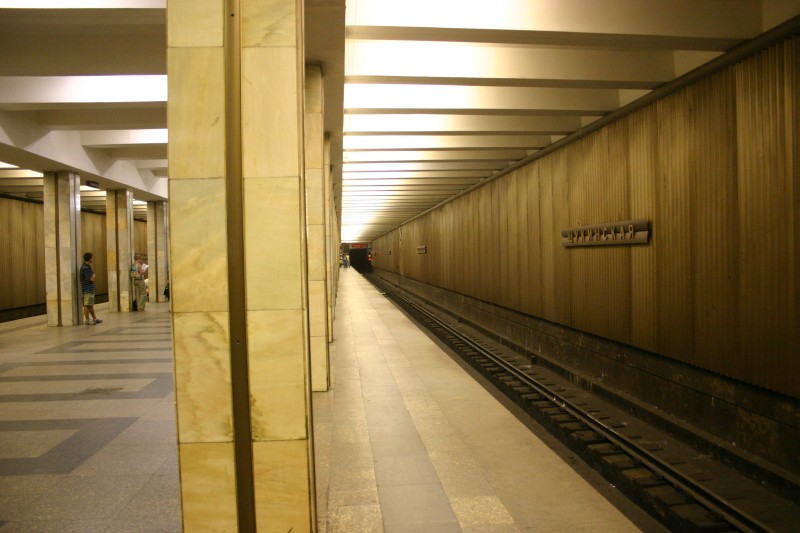
When I first landed in Moscow in 1989 as an employee of a USSR-Indian joint venture restaurant the dollar was worth .70 kopeks officially and sold on the streets for 15 rubles. We left India with essentials like toothpaste, soaps etc in large numbers in our luggage which were in short supply in the USSR ( I am using the USSR because the Soviet Union was still intact). In those days the typical commute was a 5 min walk to the Shukinskaya metro. The Moscow Metro was very efficient and we made the commute from our Metro to Metro St 1905 in 15 minutes. The metro was amazing it cost 5 kopeks for entry and you could exit anywhere. During peak hours the metro frequency was 40 seconds to 3 minutes.
Here is a YouTube Video that shows a line but there were no lines during those days.
Going back to from Boris Jordan Washington post Outlook article the article writes about why the Russians think that Putin is good and have voted for him again. In have not been back to Russia after 1992 but it is evident that the last 15 years have been bad for Russia Boris says “Hyperinflation and the government's default on its obligations destroyed their savings and pensions. In the first five years of the decade, Russia's gross domestic product fell by more than 50 percent while prices rose 6,000-fold.”
My salary was paid in equivalent currency so my first salary was 160 rubles and when I left Moscow in 1992 it was $160,000 rubles. Most Common folk did not have the luxury of having their salaries linked to inflation. During those days retirees had to start selling their personal belongings to survive. Retirees made statements like "At least under the Communists I wasn't hungry," Crimes and lawlessness became a big problem in Moscow. One day while I was at work my apartment was burglarized and my TV VCR and music system were stolen.
What Putin did according to Boris Jordan w’ crack down on the excesses of the earlier era and return stability -- and a measure of dignity -- to Russian life. “
“Russians support their president because he did something rare for a politician: He delivered. Russia today is a resurgent economic power, with the tenth-largest economy in the world. Eighty percent of the economy is privatized, according to the Accounts Chamber of the Russian Federation. And the country is flush with oil revenue, having overtaken Saudi Arabia as the world's leading producer of oil”
I am not a political commentator and will not tell you what is right or wrong but I guess if you ask a hungry man if he wants food or democracy I think he will choose food. That si what the Russians have done in these elections.

Disclaimer: This blog post reflects my personal views only. AI tools may have been used for brevity, structure, or research support. Please independently verify any information before relying on it. This content does not represent the views of my employer, Infotech.com.
