
The Cost of Unity: India's Single Time Zone Dilemma
Growing up in India, we were lucky to have only one time zone: Indian Standard Time (IST, UTC+5:30). This unified approach fosters national cohesion, but it comes with real trade-offs, especially for the easternmost states like Arunachal Pradesh, Assam, Nagaland, and others in the Northeast.
In these regions, the sun rises and sets significantly earlier than in western states such as Gujarat or Kerala—sometimes by nearly two hours. In winter, sunrise in Itanagar can be as early as around 4:30 a.m., while it's closer to 7 a.m. in parts of the south. This misalignment leads to practical issues: children often start school in the dark, people lose productive evening hours, and studies suggest reduced sleep (up to 30 minutes less daily for some), lower educational performance (particularly in poorer communities), and billions in estimated annual economic productivity losses. There have long been calls for a separate time zone for the Northeast, perhaps one hour ahead of IST, to better match solar time. As recently as early 2026, social media discussions, NGO advocacy, and regional leaders continue to highlight the issue—proposing anywhere from a one-hour shift to a full two- or three-zone system—yet official policy remains firmly unified under IST, citing national cohesion and avoiding logistical chaos.
"In a country as vast as India, one clock means millions wake to darkness—or lose evening light—simply for the sake of uniformity."
Even the Andaman and Nicobar Islands, geographically much closer to Jakarta (Indonesia) and parts of Southeast Asia, follow the same single IST. Despite their longitude aligning more naturally with UTC+6:30 or +7 used in neighbouring Southeast Asian regions, India adopted a unified time post-independence in 1947 for national unity. Historically, British India had multiple zones (Bombay Time, Calcutta Time, Madras Railway Time), but independence standardised everything to the 82.5°E meridian near Mirzapur—prioritising uniformity over local solar alignment.


My First Brush with Clock Changes: Moscow 1989 to Today
My first real encounter with daylight saving time (DST) came in 1989 while in Moscow (then part of the USSR). The concept was completely foreign and caused considerable confusion—clocks sprang forward in late March and fell back in September. It felt unnecessary and disruptive.
By the time I moved to the United States, I was more accustomed to it, though I never grew to love it. Thankfully, the change usually happens on a Sunday (like today, March 8, 2026, when most of the US "springs forward" at 2 a.m. local time, losing an hour). Decades ago, when technology wasn't as advanced, this shift wreaked havoc: scripts scheduled for 1–2 a.m. often failed or double-ran, leading to all sorts of debugging sessions.
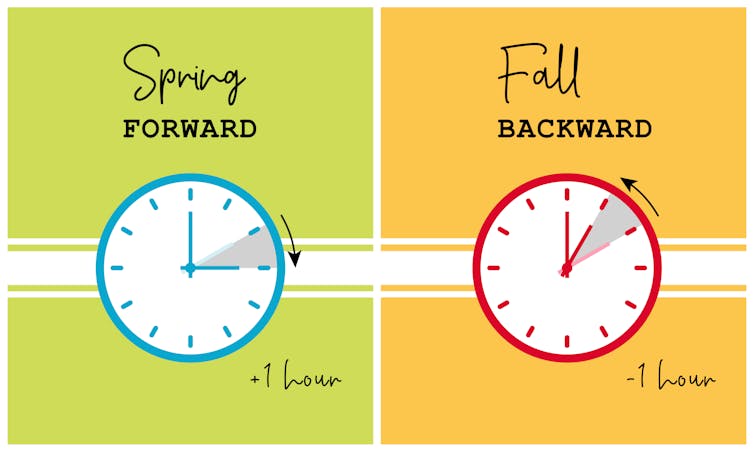
DST in the Modern World: An Outdated Ritual?
Today, many countries have moved on from this practice entirely. Only about a third of the world observes DST—mostly in Europe, North America (with exceptions like Hawaii, most of Arizona, and now shifting policies elsewhere), and scattered parts of South America and Oceania. Entire continents like Asia (including India, China, Japan, Indonesia, South Korea) and most of Africa skip it completely. Numerous nations have abolished it in recent years or decades: Russia (2014), Turkey (2016), Mexico (mostly 2022), Brazil, Argentina, Iran, Jordan, Kazakhstan, Paraguay (2024), and others. Notably, just this year, British Columbia (Canada) has adopted permanent year-round daylight saving time following the March 8, 2026, clock change—no more fall-back—citing health, family, and scheduling benefits while providing extra evening light in winter.
In our always-connected, 24/7 digital world—with smart devices, global teams, and automated systems handling scheduling—DST feels increasingly outdated. The promised energy savings are modest and highly debated (some studies show net increases in electricity use due to higher heating/cooling demands offsetting lighting reductions), while disruptions to circadian rhythms, post-spring-forward spikes in heart issues, productivity dips, and traffic accident increases are better substantiated. Perhaps it's time for more places to follow the majority and stick to one steady time year-round.
Having lived both the simplicity of India's unchanging IST and the twice-yearly chaos of DST, I lean toward steady time. But the Northeast's struggle reminds us that "one size fits all" can come at a real human cost—lost daylight, sleep, and opportunity—while global shifts like British Columbia's permanent DST show that change is possible when alignment with health and modern life takes priority.
What are your thoughts on time zones and DST? Have you battled weird glitches from clock changes, or do you cherish the simplicity of a single, unchanging time like in India? Share in the comments below.

